See the structure, then implement and verify with the notes.

Check the same re-engagement task against business explanations, observed work and system records. Keep conflicts open.
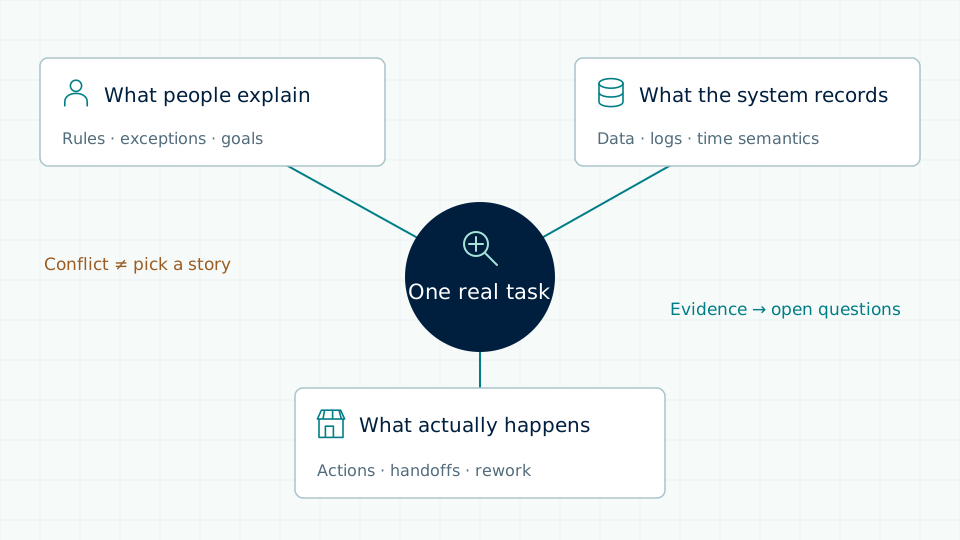
What situation are you walking into?
IT says data is complete; operations says segments are useless; stores say campaigns do not fit. Each can be partly right. Collect verifiable evidence rather than adopting the most senior opinion.
01 / Interview an incident, not an aspiration
Begin with “walk me through the last time,” then verify frequency, time, inputs and exceptions. Avoid leading hypothetical adoption questions. One authorized, de-identified work sample is more useful than ten broad statements of enthusiasm. Obtain appropriate consent for recording.
02 / Separate facts, interpretations and incentives
A fact might be three missing stores; an interpretation is that the system is unreliable; an incentive is avoiding extra work. Keep separate columns with evidence, timestamps and owners. Model-assisted summarization must not turn inferences into facts. Preserve contradictions until tested.
03 / Map influence and actual involvement
Map decision, usage, data, governance and operations roles. Record their success measures, feared losses and required participation points. Store staff may determine adoption without signing a contract; data owners can unblock validation without owning the business result.
04 / Model nouns, relationships and actions
Extract objects, identifiers and lifecycles. Relationships need cardinality, timing and provenance. A member’s store could mean registration store or most recent purchase location. Actions need an actor, preconditions and outcomes; recommending and issuing an offer need different authority.
Put the method to work
Conflicting definitions: operations uses purchase activity, IT uses logins and finance uses net paid orders. Preserve three named, versioned definitions and document which one the pilot uses and why.
Practice this week
- Complete three role interview cards.
- Record ten facts, interpretations or incentives, including two contradictions.
- Submit a JSON draft with four objects, three links and two actions.
Acceptance checks
- Key facts trace to specific examples.
- Objections retain meaning and validation actions.
- No unnecessary sensitive attributes are introduced.
90 minutes: resolve a disagreement with one record
Three role cards disagree: operations counts created orders, finance net paid orders, and store staff completed checkouts. Explain what each definition is for before selecting the pilot metric.
0–20 min: interview the last discrepancy without leading with a solution. Record incident, input, action and consequence.
20–55 min: jointly examine synthetic order o04: paid, then fully refunded. Which metrics include it, and what decisions depend on them?
55–90 min: complete an evidence ledger and relationship map. Ask the dissenting role to confirm its position is represented accurately.
Artifact excerpt · synthetic example
Record E-04
Fact: sample o04 was paid, then fully refunded
Interpretation A: campaign generated initial buying intent
Interpretation B: no net paid revenue remained
Pilot: net payments for budget review; created orders for intent
Verify: refund time, cross-period handling, data freshness
Owners: operations events, finance amounts, data versioning
Instructor review
Trace the ledger to a record, not merely “the business said so.” One fact can support different interpretations with different scopes.
An unseen field challenge ↗
How would you preserve contradictory evidence and still move the meeting toward a practical next step when a senior stakeholder disagrees?
Case studies for this module
Facts need sources, opinions need attribution and hypotheses need tests. An interview note is not an agreed fact.
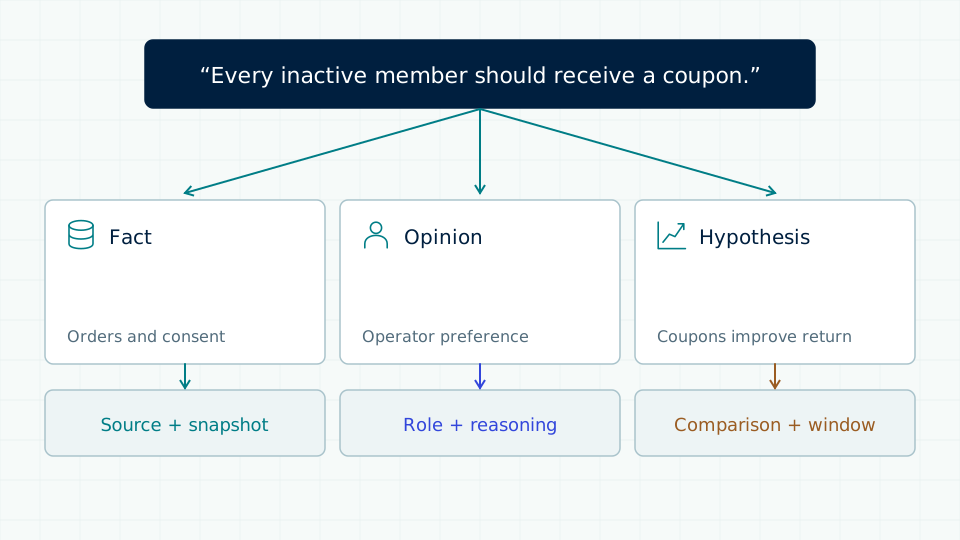
How should “sales thinks leads are poor” be recorded?
Poor may mean irrelevant, duplicated, stale or wrong timing. Each needs a different task and metric.
References and further reading
Palantir ↗ · Ontology overview查阅 / Accessed 2026-09-07 · PalantirAnthropic ↗ · Claude for the financial industry: A practical deployment guide (AIG case)2026 · AnthropicRead alongside the assignment and record design constraints and tests. Verify specifications against your deployment version.