See the structure, then implement and verify with the notes.
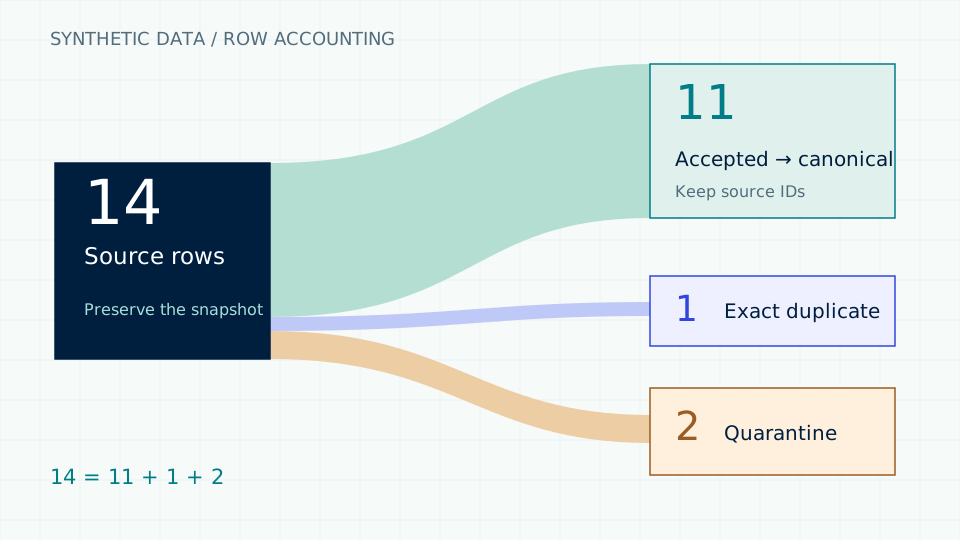
Synthetic kit: 14 source rows = 11 accepted + 1 exact duplicate + 2 quarantined. Reconcile amounts and mappings too.
What situation are you walking into?
The connector works, but tags contain free text, timestamps disagree and orders include duplicates and refunds. Connectivity is green while business meaning is broken.
01 / Profile defects that change decisions
Check nulls, uniqueness, ranges, timestamps, freshness and cross-table consistency. Prioritize defects by decision impact. Missing channel can invalidate attribution; missing phone may not block read-only segmentation. Preserve raw snapshots and record transformation versions and quarantine reasons.
02 / Treat the adapter as a contract boundary
Normalize names, types, timezones, units and errors. Quarantine invalid records rather than silently converting them to zero. Keep source IDs and lineage. Use contract fixtures and an idempotency test proving re-import does not inflate orders. Keep source systems read-only.
03 / Prove one data chain before a full platform
Build one chain: order samples, qualifying transactions, member objects, metrics, one recommendation and source evidence. Use a minimal architecture with observable model, tool, data and logging boundaries. Integration plans need availability, permissions and reconciliation criteria.
04 / Make the demo reveal useful disagreement
Prepare happy, insufficient-evidence and connector-failure paths. Let a practitioner inspect outputs with their inputs and limitations visible. A proof of concept tests feasibility, a pilot tests controlled use and value, and production requires operations and governance.
Put the method to work
Synthetic logistics exercise: loaded on time means warehouse scan in one system and truck departure in another. Equal booleans do not establish identical events. Model timestamps, deadlines and responsible roles before defining delay. This is not a verified customer case.
Practice this week
- Run profiling and rank defects by impact.
- Implement an adapter with quarantine and reconciliation counts.
- Demonstrate normal, missing-evidence and failed-connector paths.
Acceptance checks
- Raw data stays unchanged.
- Failures are not silently swallowed.
- Outputs trace to data and rule versions.
90 minutes: build a replayable data slice
Map source → validation → quarantine → normalized objects → metric → evidence. Demonstrate one accepted and one rejected record. An HTTP 200 is not the acceptance criterion.
0–20 min: read the importer in engine.py. Annotate types, null handling, date and amount rules; keep the source immutable.
20–55 min: run identical inputs twice. Record input identity, contract version, accepted/rejected counts and output identity.
55–90 min: introduce a renamed column and unknown state. Decide whether to map, quarantine or fail the run; show that data is not silently lost.
Artifact excerpt · synthetic example
Run evidence (example fields)
run_id / input digest / adapter_version / metric_version
raw = accepted + duplicate + quarantine
14 = 11 + 1 + 2
Quarantine: row identity, reason_code, review owner
Replay: identical version and input → identical metric
Change: new mapping → new contract version and regression report
Instructor review
Separate transport retries from business duplicates. Retry safety depends on action semantics; an idempotent import does not make downstream sending idempotent.
An unseen field challenge ↗
When refunds arrive late, should you replace yesterday’s report, issue a correction or recompute history? Preserve both provenance and explainability.
Case studies for this module
Adapters normalize fields and types; contracts define meaning. Retain source IDs and versions for reconciliation.
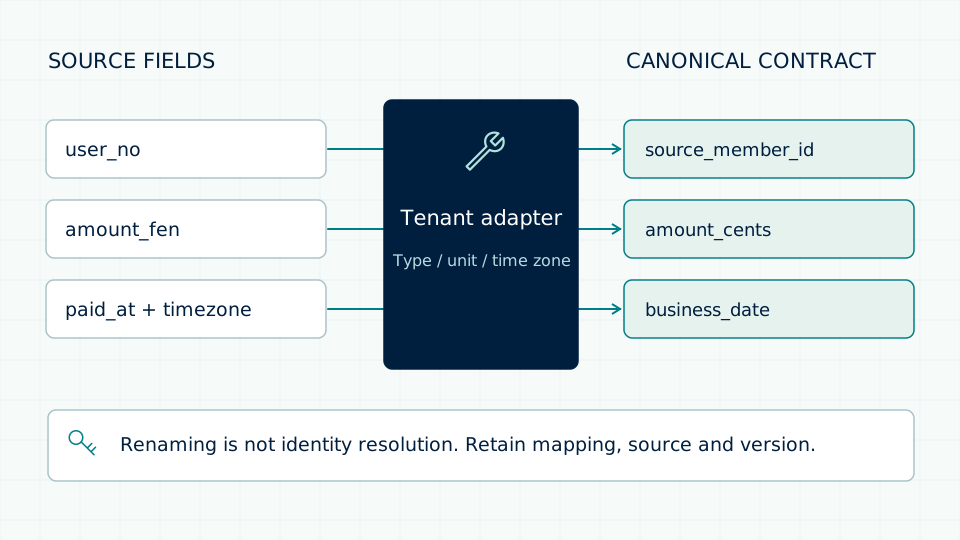
HTTP 200, but tax treatment in revenue is unknown. Accept?
Connectivity is one prerequisite. Decision-changing semantics need agreement and contract tests.
References and further reading
Airbus ↗ · Airbus launches Skywise2017-06-19 · AirbusPalantir ↗ · Ontology overview查阅 / Accessed 2026-09-07 · PalantirRead alongside the assignment and record design constraints and tests. Verify specifications against your deployment version.